Berlin Startup Events: A Founder's Guide
Find the best Berlin startup events for founders. Tech meetups, accelerator events, and networking across Europe's startup capital.
Berlin startup events are the fastest way to break into Europe's most founder-dense city. Between Silicon Allee meetups, accelerator demo days, and the city's famously casual networking culture, a founder who shows up consistently for ninety days will know more of the Berlin startup community than most people do after three years. This guide covers the recurring event formats worth your calendar, how German networking culture actually works, and how to build a Berlin routine that compounds.
Whether you're relocating to Berlin, building a German startup community presence, or visiting for a funding sprint, the tactics below apply. The city rewards founders who are present — and quietly filters out those who only appear when they need something.
What are the best Berlin startup events for founders?
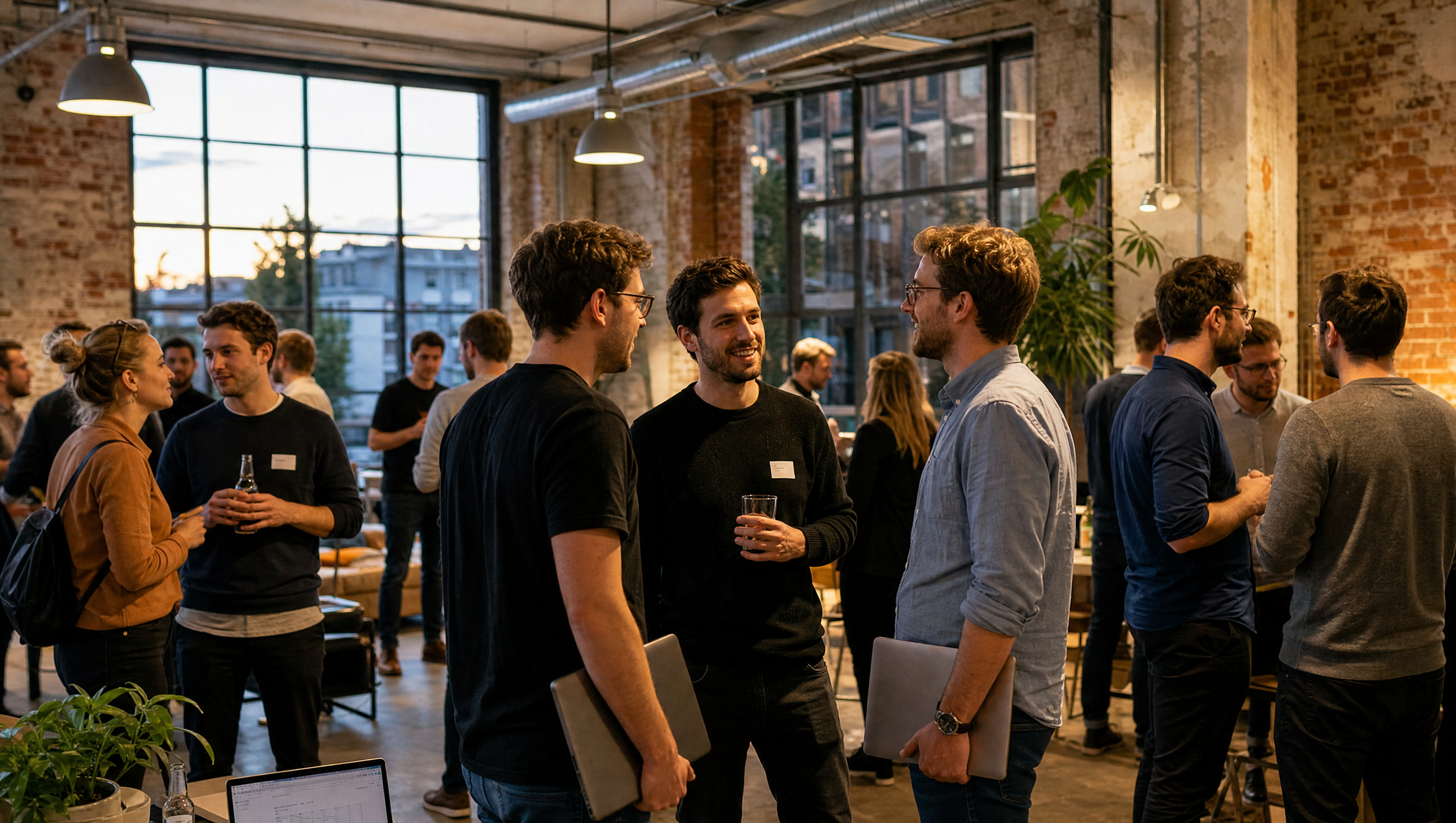
The best Berlin startup events are the recurring weekly and monthly formats: founder meetups in Kreuzberg and Mitte, SaaS and product-focused gatherings, investor office hours, and the demo-day circuit run by the city's accelerators. Unlike conference-heavy startup capitals, Berlin's value lives in its weekly rhythm — small rooms, low ticket prices, and the same faces showing up until they're not strangers anymore.
That recurring rhythm is exactly why discovery matters. The best founder cities are the ones where you can find startup events near you every week rather than waiting for one big conference. Berlin passes that test better than almost any European city.
The weekly meetup circuit
Berlin's core scene is a set of weekly and biweekly gatherings — founder coffees, product meetups, and English-language tech talks — concentrated in Kreuzberg, Neukölln, and Mitte. Most are free or under €10, announced through Meetup, LinkedIn, and community Slack groups. Berlin tech meetups run almost entirely in English, so language is never a barrier; showing up is.
Treat your first month as a survey: attend everything in your niche once, then double down on the two or three rooms where the attendees are one stage ahead of you. That's the same filtering logic that works in NYC — the room quality matters more than the event brand.
Accelerator demo days and pitch nights
Berlin's accelerators and studio programs run regular demo days and pitch nights that are open to the wider community. These are the highest-density rooms in the city: investors, operators, and hiring prospects in one evening. If you're raising or hiring, demo days are your priority tier. Our demo day and pitch competition guide covers how to work these rooms without being "that founder."
If you're pre-pitch, attend as an audience member first. Watch which founders get pulled into hallway conversations afterward and steal their event pitch structure — the pattern is learnable, and Berlin's rooms are forgiving places to practice.
How do I network with the German startup community as a founder?
You network with the German startup community by being consistently present, asking direct questions, and following up in writing — Berlin's scene is international and English-first, but the professional culture rewards substance over hype. Skip the hard sell; German founder networking runs on credibility built through repeated contact, not one loud evening.
A few culture notes worth knowing: small talk is shorter than in the US, directness is politeness not aggression, and business cards or LinkedIn connects happen after a real conversation, not during introductions. If small talk drains you, read how introverts win at tech events — Berlin's low-key rooms are actually an introvert advantage.
A 90-day Berlin networking plan
- Days 1–30: Attend 3–4 events per week across different formats — meetups, demo days, one industry-specific event. Your goal is coverage: map the rooms, meet organizers, and identify where your niche actually shows up.
- Days 31–60: Narrow to the 2–3 rooms with the best founder-to-tourist ratio. Start having second and third conversations with the same people. Run the two-problem technique in every conversation.
- Days 61–90: Give before you ask — make intros, share your notes from events, volunteer at a meetup. By day 90 you'll have a working network; this mirrors the full playbook in building a founder network from scratch.
One Berlin-specific edge: the city's scene is dense but compact. You will see the same people repeatedly, which makes follow-up the highest-leverage habit. Our non-salesy follow-up guide gives you the exact templates.
When are Berlin's biggest startup events and conferences?
Berlin's biggest startup moments cluster in spring and late autumn, with the flagship international conferences — and the demo-day season that surrounds them — filling the weeks between. Q4 in particular is a sprint: every European founder community empties into the conference circuit, and Berlin's side events around those weeks are where the real meetings happen.
Plan around the majors with our fall 2026 startup calendar and the best Q4 2026 events for founders. If you're budgeting an international run that includes Berlin, the international events budget guide will keep the trip affordable.
Should founders attend Berlin conferences or meetups?
Conferences give you density and serendipity; meetups give you depth and recurrence. In Berlin, do both with intent: use conferences to compress a quarter of introductions into two days, and use the weekly meetups to turn those introductions into actual relationships. We break down the tradeoffs in tech conferences vs. intimate networking events.
How much do Berlin startup events cost?
Most Berlin tech meetups are free or under €10; accelerator demo days are typically free with application; and the big conferences run from free community passes to several hundred euros for full access. Berlin is one of Europe's most affordable startup cities to network in — a founder can run a serious event routine for under €100/month.
The free-tier scene in Berlin is genuinely good, not a teaser. Apply the same filters from finding free tech events worth your time: organizer track record, repeat attendance, and whether the speakers build or just talk.
Is Berlin worth relocating to as a startup founder?
Berlin is worth relocating to if you want Europe's densest founder-per-square-kilometer scene at the lowest cost of any major startup capital — but be honest about the tradeoffs: salaries and valuations historically run below US equivalents, and the German bureaucracy famously tests patience. What you get in exchange is a community that is open by default, international by design, and tolerant of early, unfinished products.
For US founders weighing Berlin against a domestic move, treat it as an expansion decision, not an escape — the same calculus applies wherever you land, whether that's San Francisco, New York, or Seattle. And if you're testing Berlin before committing, the startup retreat model is a smart way to spend a month in the scene without burning your runway.
However you engage, make it recurring. Set your cities on 47Hz and get the events that matter in your inbox every Monday morning. Browse live events →
Explore more from 47Hz
Keep the momentum going — these guides cover the skills and cities that pair best with a Berlin push.
Networking
- How to Network at Tech Events
- Startup Event Etiquette: The Unwritten Rules
- The Conference Buddy System for Founders
Guides
- Tech Events for First-Time Founders
- The Startup Conference Solo Founder Guide
- Startup Event ROI: How to Measure Whether It's Worth It