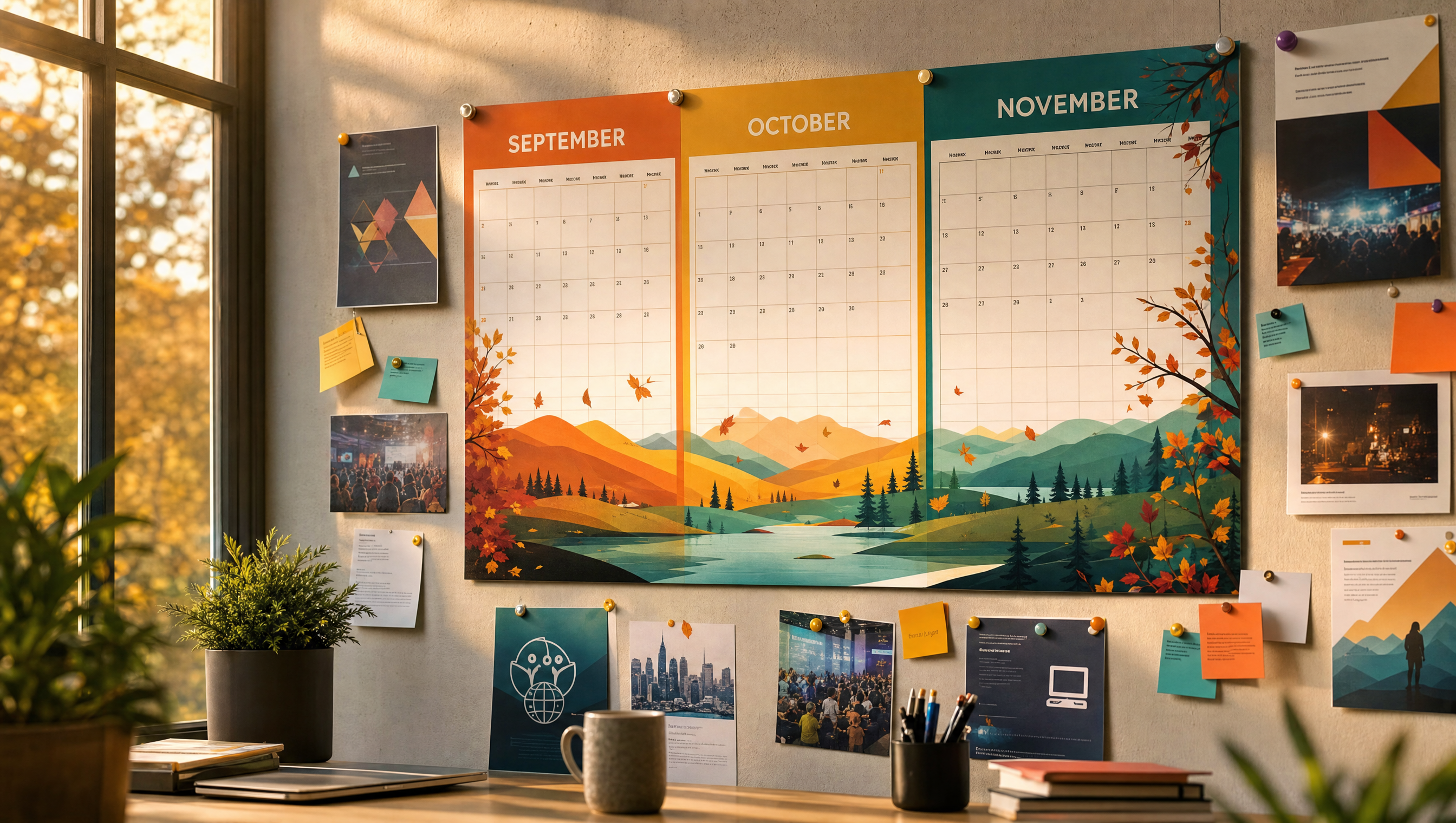
Fall 2026 Startup Calendar: Every Major Event in One Place
The complete fall 2026 startup calendar. Every major event from September through November, organized by date and city.
Fall is when startup events shift from summer's broad exploration to targeted execution. From September through November 2026, the calendar fills with industry-specific conferences, investor events, and regional gatherings designed for founders who know what they need. This calendar puts every major fall 2026 startup event in one place so you can plan ahead, book travel at reasonable prices, and commit to the events that actually move your startup forward.
Unlike summer, which favors large generalist conferences, fall events tend to be more focused. Industry verticals get their own dedicated summits, investor activity picks up as firms deploy capital before year-end, and regional ecosystems run their flagship gatherings. If summer was about exploring, fall is about executing.
What are the biggest startup events in fall 2026?
The biggest startup events in fall 2026 include Web Summit in Lisbon, TechCrunch Disrupt in San Francisco, Money20/20 in Las Vegas, and Slush in Helsinki. September and October are the heaviest months, with November tapering into smaller, more intimate gatherings as the holiday season approaches.
Here is a month-by-month breakdown of what to expect and where to be.
September 2026: The post-summer reset
September is when founders come back from summer with renewed focus. The events this month reflect that energy — they are action-oriented, deal-heavy, and designed for people who have done their homework. Expect strong activity in San Francisco, New York, and Boston.
- TechCrunch Disrupt (San Francisco) — The startup battlefield is one of the most competitive pitch competitions in the world. Even if you are not competing, the networking floor and after-parties make this one of the highest-signal events of the year. If you attend one event in September, make it this one.
- Climate Tech Summit (San Francisco) — Climate and cleantech founders converge here. If you are building in the sustainability space, this is where you find investors, corporate partners, and fellow founders navigating the same regulatory landscape.
- SaaStr Annual (SF Bay Area) — The largest SaaS conference globally. B2B founders, enterprise buyers, and SaaS investors gather for three days of tactical content and high-quality networking. The hallway track alone is worth the ticket.
- Startup Grind Regional Events (Multiple cities) — Startup Grind runs regional chapters across the US, and September is when many chapters host their flagship events. Check your local chapter for dates and speakers.
October 2026: Industry deep dives and international
October is the busiest month on the fall startup calendar. Industry-specific conferences dominate, and the major international events kick off. This is the month to go deep in your vertical or make the trip to Europe for the continent's biggest gatherings. Key cities include Las Vegas, Chicago, and Lisbon.
- Money20/20 USA (Las Vegas) — The definitive fintech conference. Payments, banking, lending, and crypto founders all converge on Vegas for four days of deal-making. If you are building anything in financial services, this is non-negotiable.
- Web Summit (Lisbon) — Europe's largest tech conference draws 70,000+ attendees. The ALPHA startup program gives early-stage founders access to investors and media. It is a massive event, so plan your schedule carefully to avoid getting lost in the crowd.
- HealthTech Conference (San Francisco) — Healthcare founders face unique regulatory and distribution challenges. This event brings together operators who have navigated FDA approvals, hospital procurement, and payer negotiations.
- AI Summit (New York) — The commercial AI ecosystem converges here. Enterprise buyers, AI-first founders, and investors focused on the space meet to discuss deployment, regulation, and the next wave of applications.
November 2026: Intimate gatherings and year-end planning
November shifts toward smaller, higher-quality events. The mega-conferences are done, and founders use this month to solidify relationships made earlier in the fall. Regional events in cities like Austin, Denver, and Seattle run their strongest programming.
- Slush (Helsinki) — Europe's premier startup event. The Slush 100 pitch competition, investor matchmaking, and the overall production quality make it worth the trip to Finland. November in Helsinki is cold, but the event energy is electric.
- AfroTech (Various US cities) — The largest Black tech conference. Founders, engineers, and investors gather for networking, content, and community. If you are building a diverse team or serving underrepresented markets, this event is essential.
- AWS re:Invent (Las Vegas) — The cloud infrastructure conference. Not strictly a startup event, but the startup track, AWS credits program, and sheer density of technical talent make it valuable for founders building on AWS.
- Regional founder dinners and offsites — November is prime time for invite-only gatherings. Accelerator alumni groups, angel networks, and founder communities host their year-end events. These are harder to find but often produce the strongest relationships.
How should founders plan their fall event schedule?
Pick two or three anchor events and build your fall around them. The founders who get the most out of conference season are the ones who treat it as a strategic investment, not a social calendar. Before committing to any event, ask yourself: what specific outcome am I looking for? A co-founder? A lead investor? Customer conversations? Technical talent?
If you are pre-product, focus on community-driven events like Startup Weekend and hackathons where you can validate ideas and find co-founders. If you are post-launch, industry-specific summits give you direct access to buyers and partners. If you are raising, investor-focused events and demo days are your best use of time.
Book travel early. Fall conference prices spike in August, and the best hotel blocks near venues sell out fast. Many events offer early-bird pricing that saves 30-50% if you commit by mid-summer. For tips on maximizing your event investment, see our guide to measuring startup event ROI.
Which cities have the best startup events in fall 2026?
The top cities for fall startup events in 2026 are San Francisco, New York, Las Vegas, Lisbon, and Helsinki. Each city attracts a different type of founder and investor, so your choice should align with your goals.
San Francisco and the Bay Area remain the epicenter for startup events. TechCrunch Disrupt, SaaStr Annual, and dozens of smaller gatherings make September and October packed with opportunities. The density of investors and operators means every event has high signal-to-noise. Browse live events in SF →
New York excels at industry-specific events — fintech, media, commerce, and enterprise SaaS. The AI Summit and various vertical conferences make it the best city for founders building in regulated or enterprise markets. Browse live events in NYC →
Las Vegas hosts Money20/20 and AWS re:Invent — two of the most important fall events for fintech and cloud infrastructure founders. Vegas is not a year-round tech hub, but for two weeks in October and November, it becomes the center of the startup world. Browse live events in Las Vegas →
Lisbon comes alive in early November with Web Summit. The city has invested heavily in its startup ecosystem, and the conference draws founders from across Europe, Africa, and the Middle East. It is the best international event for founders looking to expand beyond the US market.
Helsinki hosts Slush in late November. The event is smaller than Web Summit but higher quality — the curation is tighter, the investor-founder matchmaking is more intentional, and the overall experience is designed for serious founders, not tourists. Browse live events in Seattle →
Are fall startup events worth the investment?
Fall events are often more valuable than summer events because the attendees are more focused. By September, founders have clarity on their Q4 goals and what they need to accomplish before year-end. Investors are actively deploying capital — many firms have a "use it or lose it" deadline in Q4. The conversations are more specific, the deals move faster, and the follow-through rates are higher.
The cost is real — a major conference can run $2,000-$5,000 all-in. But a single investor meeting, customer introduction, or co-founder connection can be worth 100x that. The key is going with a plan: schedule meetings in advance, have your pitch ready, and follow up within 24 hours. Our event follow-up guide covers the exact playbook for converting conversations into relationships.
The real value often comes from unplanned conversations — hallway chats, lunch introductions, and after-party connections. That only happens if you are physically present and engaged. If you are debating whether to attend an event, the answer is almost always yes, as long as you go with intention.
How do you prepare for a fall startup conference?
Start preparing three to four weeks before the event. Download the attendee app, identify 10 to 15 people you want to meet, and send personalized meeting requests. Have your 30-second intro ready — not a sales pitch, but a clear explanation of what you are building and why it matters. For help crafting that intro, see our guide to the 30-second founder intro.
During the event, take notes on every meaningful conversation. You will meet dozens of people, and without notes, the details blur together within days. After the event, follow up within 24 hours with a personalized message that references something specific from your conversation. This is where most founders fail — they attend great events but never convert those conversations into lasting relationships.
If you are an introvert or find large conferences overwhelming, consider smaller regional events or invite-only gatherings. The connections are often deeper because the group is curated and everyone has skin in the game. Our networking guide for introverts has specific strategies for making the most of these settings.
Explore more from 47Hz
Looking for more ways to plan your startup event strategy? Here are some of our most popular guides:
Events by topic
- Fintech Events for Founders
- HealthTech Startup Events
- AI and Machine Learning Events for Founders
- Women in Tech Events 2026
Networking and strategy
- How to Follow Up After a Tech Event
- Startup Event ROI: How to Measure Worth
- Build Your Personal Brand as a Founder
- Survey of 500 Founders: What Events Drive Results
Guides
- Summer 2026 Startup Calendar
- Tech Events for First-Time Founders
- Startup Weekend and Hackathon Guide
- Startup Accelerator Programs Guide