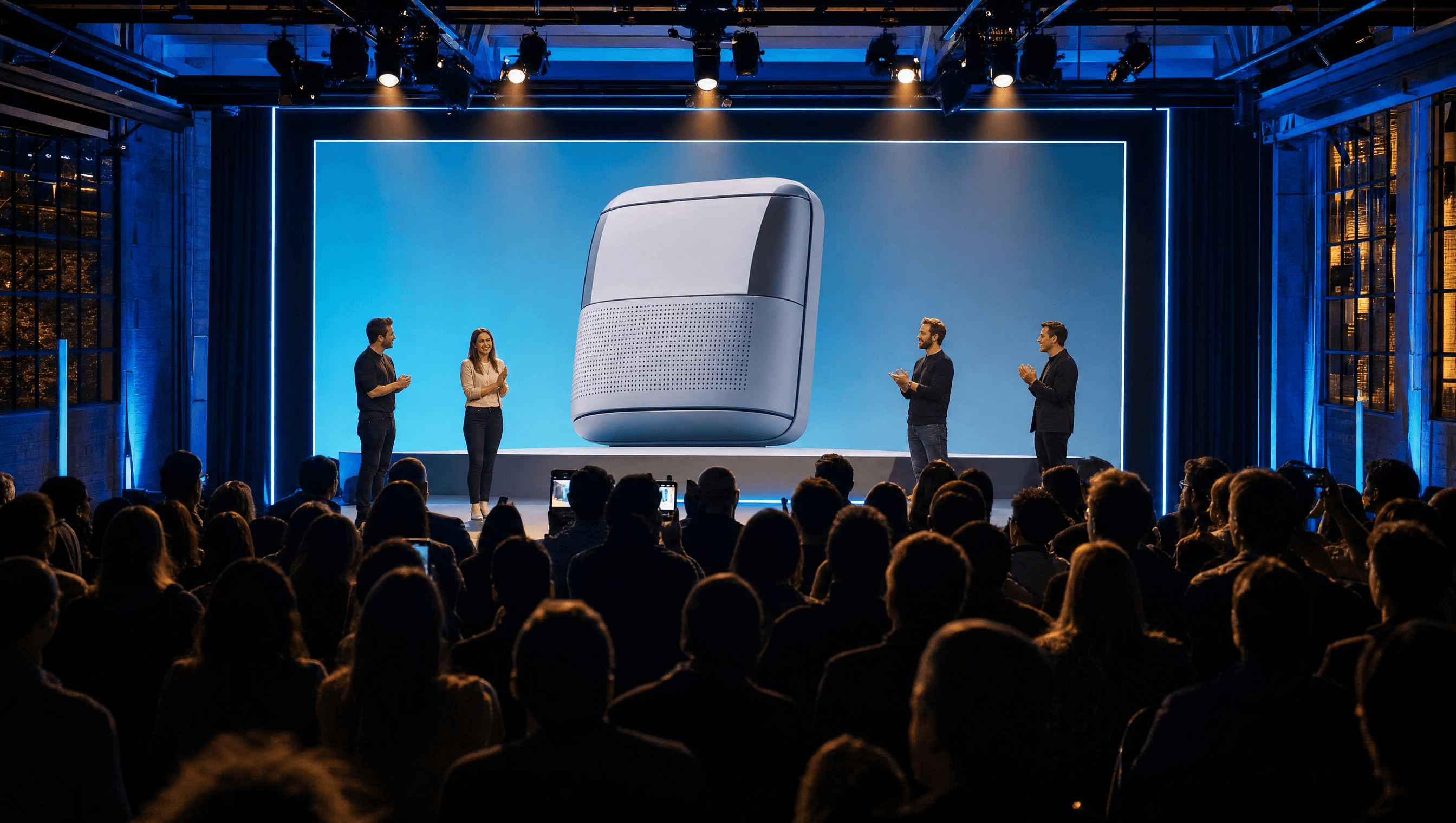
How to Plan a Product Launch Event for Your Startup
How to plan a product launch event for your startup: format options, budgets, guest lists, and a week-by-week checklist from the pros.
A product launch event is the single highest-leverage moment in your startup's calendar — the one night where customers, press, investors, and your whole team are looking at the same thing at the same time. Plan it well and you turn a release into momentum. Plan it badly and you burn eight weeks of team energy on a party nobody remembers. Here's how to plan a product launch event that actually moves the needle: the formats that work, real budgets, the guest list math, and a week-by-week checklist.
This guide is written for pre-seed to Series A teams — the companies that can't hire an events agency and shouldn't try to. If you've organized a demo day or a community meetup before, the mechanics will feel familiar; the difference is that a launch event has one job: convert attention into users, press, and pipeline within 48 hours.
What is a product launch event?
A product launch event is a gathering — live, virtual, or hybrid — designed around the public reveal of a new product, where the demo, the room, and the follow-up are engineered together to produce signups and coverage. It's not a party with a PowerPoint. The best launch events share three traits: a single "you had to be there" moment (the reveal), a curated room (the right 60 people beat a random 300), and a next step that happens while excitement is hot — accounts created on the spot, a waitlist opened, calendars booked.
That definition matters because it dictates your decisions. If an element of your plan doesn't serve the reveal, the room, or the follow-up, cut it. Most failed launch events fail because they drift into generic party planning — open bar, DJ, logo on a wall — with nothing for attendees to actually do.
How much does a product launch event cost?
Most startup product launch events cost between $500 and $10,000, with three dependable tiers: a lean launch at $500–$2,000 (venue + light catering), a mid-size launch at $2,000–$10,000 (branded venue, AV, photographer, swag), and a flagship launch above $10,000. Spend against the guest list, not the fantasy — the room's quality matters more than the room's price.
Lean launch: $500–$2,000
Book a partner's office, a coworking space after hours, or the back room of a restaurant. Spend almost everything on two things: the demo setup (a screen people can actually see) and drinks that don't run out at 8:15. A 40–60 person lean launch with a great demo beats a 150-person generic mixer every single time. Need a venue strategy? Our venue booking guide covers how to get spaces comped.
Mid-size launch: $2,000–$10,000
This is where most seed-stage teams land. Budget roughly: 40% venue and AV, 25% food and drink, 15% photography and video, 10% swag, 10% buffer. Two non-negotiables at this tier: a photographer (launch photos are your press kit for the next six months) and a five-minute live demo that has been rehearsed at least five times.
Flagship launch: $10,000+
Only worth it if you have real press or enterprise pipeline to show for it. At this tier, sponsors can offset 30–50% of costs — and startups sponsor startups, because your launch audience is their customer list. Read how to get sponsors for a startup event before you write this tier off as unaffordable.
Which product launch event format should you choose?
Match the format to your product's "wow" mechanism: demo-driven products need a stage, community-driven products need a room, and developer tools need either a screen recording or nothing at all. Here are the four formats that consistently work for startups.
The demo-style launch
A short live demo in front of a curated audience, followed by hands-on time. Best for products that impress in under three minutes. The format is close to a demo day, and the prep discipline is identical — our demo day guide covers the rehearsal cadence that makes live demos bulletproof.
The launch party
Reveal moment at 7:30, music after. Works when your product's story is social or consumer-facing, and when the goal is vibe and photos over immediate signups. Keep the reveal early — parties decay fast, and you don't want your big moment competing with the bar line.
The virtual product launch
A livestreamed demo plus a live Q&A, with a recorded version as the permanent asset. Cheapest option, infinitely scalable, and the recording keeps converting long after the event. The mechanics mirror running a virtual demo day: tight run-of-show, a moderator, and a hard 45-minute cap.
The intimate dinner
Ten to sixteen people who matter — key customers, two journalists, three investors — around one table. Highest signal per dollar of any format, and the one most teams overlook. The playbook in how to host a founder dinner transfers directly: seat assignments, conversation prompts, and a reveal that feels like a secret.
How far in advance should you start planning a launch event?
Six weeks is the sweet spot for a 50–150 person launch event — long enough to land a venue, brief press, and coordinate with your product team, short enough that the event doesn't drift. Under three weeks and guest-list acceptance rates collapse; over ten weeks and you'll rewrite the plan four times. Anchor the date to the product being genuinely demoable, not the reverse.
The week-by-week product launch event checklist
Here's the checklist broken into weekly chunks — the same structure experienced organizers use for planning any startup event, compressed for a launch.
- Week 1 — Lock the why. Write one sentence: "This event is a success if ___." Pick the format and the date. Set the budget ceiling. Name the owner of every workstream (demo, room, guest list, press) — one person each, no committees.
- Week 2 — Venue and reveal. Book the venue (get it in writing, confirm AV yourself). Draft the run-of-show backwards from the reveal moment. Build a one-page press angle: what's new, why now, why this room.
- Week 3 — Guest list v1. List every must-have attendee by name — customers, press, investors, community. Categorize into "the room" (must show) and "the reach" (nice to have). Expect 40–50% attendance; invite roughly twice your target.
- Week 4 — Invites out. Send personal invitations to the must-haves (DM or email, not a blast). Then publish the public invite. For date-picking and invitation tactics, our startup event planning guide has the full treatment.
- Week 5 — Rehearse and brief. Run the full demo five times, including once with the actual AV. Send embargoed press briefings with screenshots and founder availability. Confirm catering, photographer, and swag.
- Week 6 (launch week) — Confirm everything twice. Re-confirm venue, AV, catering 72 hours out. Assign greeters for must-have guests. Prep the follow-up emails so they're written before the event, not after.
- Launch day. Doors early, staffed check-in, reveal within the first 40 minutes, laptops out for on-the-spot signups. One person's only job: get the room to the demo on time.
The events that look effortless are the ones that were over-planned and under-announced. Curate harder, invite less publicly, rehearse more.
How do you build a launch event guest list?
Build the guest list in concentric circles: 10–15 anchor attendees whose presence makes the event (key customers, two journalists, friendly investors), a second circle of 30–60 community members who'll post about it, and a public layer only if the first two circles are solid. A launch full of strangers gives you volume; a launch full of the right people gives you a trajectory. Personal invites to circle one, semi-personal to circle two, public link for everyone else.
Two guest-list rules that save launches: first, invite press as participants, not spectators — offer a pre-brief, founder access, and a reason to write beyond "company launched thing." Second, cap the plus-ones. Every unvetted plus-one dilutes the room you spent six weeks curating.
How do you get press and sponsors for a launch event?
Pitch journalists 3–4 weeks out with an angle, not an announcement: what does your launch reveal about a shift in your market? Embargoed briefings convert far better than event invitations. The full playbook — including how to sequence tech press, local press, and newsletters — is in getting press coverage from startup events. For sponsors, lead with audience quality: a room of 80 hand-picked founders is a sponsor's dream, and this sponsor guide shows you how to package it.
What should you do after the launch event?
The 48 hours after the event determine whether it was marketing or just a party. Send the follow-up email the next morning while the demo is still memorable — a recording, a signup link, and one clear next step. Post the photos (your photographer earns their fee here). Send every anchor attendee a personal note within 24 hours. And measure it like you mean it: signups, press mentions, and meetings booked against the success sentence you wrote in week one — the same discipline we cover in measuring startup event ROI.
Where should you host your launch event?
If you're launching in a major hub, anchor the guest list around the city's existing event crowd — they show up, they post, and they bring the next circle. 47Hz tracks the full event calendar in every major city:
- San Francisco — browse live events →
- New York — browse live events →
- Austin — browse live events →
- Chicago — browse live events →
- Seattle — browse live events →
Explore more from 47Hz
Everything you need before, during, and after your launch event:
Organizing events
- The Complete Startup Event Organizer's Guide
- How to Get Sponsors for Your Startup Event
- How to Book a Startup Event Venue
- How to Host a Founder Dinner
Demo days and pitch events
- How to Win a Demo Day or Pitch Competition
- How to Organize Your Own Startup Demo Day
- How to Run a Virtual Demo Day
Getting the word out
- How to Get Press Coverage from Startup Events
- How to Get Speaking Opportunities at Tech Conferences
- Startup Event ROI: How to Measure If It Was Worth It