NVIDIA GTC 2027 for Startup Founders: Is It Worth It?
Is NVIDIA GTC worth it for AI startup founders? What the conference offers startups, how to get value on a budget, and the side events that matter most.
NVIDIA GTC is the world's largest AI conference — tens of thousands of developers, researchers, and founders descending on downtown San Jose every March to hear where accelerated computing is heading next. GTC 2027 runs March 15–18 at the San Jose McEnery Convention Center, with pre-conference workshops on March 14. For an AI startup founder, the sticker price is steep and the crowds are real. So is it worth it? Yes — if you're building on or around the NVIDIA stack, GTC is the single densest week of AI-specific partners, investors, and technical talent all year. But the value is concentrated in the Inception startup program, the expo floor meetings, and the side events — not the keynotes. If your product doesn't touch GPUs or the NVIDIA ecosystem, your budget is better spent elsewhere.
This guide breaks down what GTC 2027 offers startups, what tickets actually cost, how the NVIDIA Inception program changes the math, and how to work the week on a startup budget — the same treatment we gave AWS re:Invent for startup founders.
What is NVIDIA GTC and when is GTC 2027?
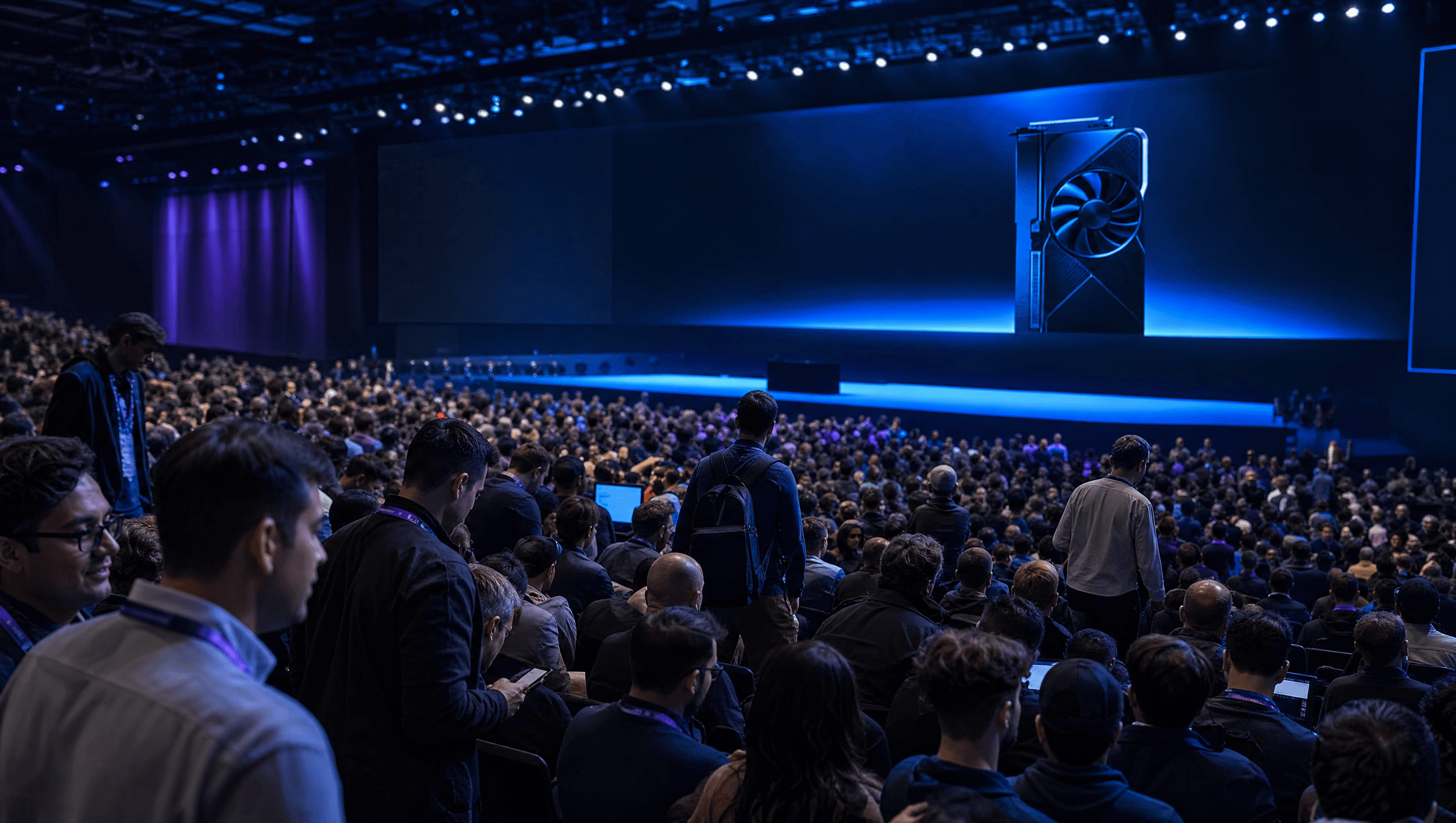
GTC (GPU Technology Conference) is NVIDIA's annual developer conference — part keynote spectacle, part deep technical training. Jensen Huang's keynote has become the closest thing the AI industry has to a state-of-the-union address: new GPU architectures, software platform launches, and robotics demos all debut on that stage. The main conference runs March 15–18, 2027, with full-day hands-on workshops on March 14, at the San Jose McEnery Convention Center and venues throughout downtown San Jose.
The scale is the draw and the challenge. Recent GTCs have drawn on the order of 25,000 in-person attendees, with the content split across thousands of sessions — from CUDA kernel optimization to agentic AI frameworks, simulation, and robotics. For startups, the relevant slice is small but valuable: the Inception startup content, the VC and partner circuit, and an expo floor packed with companies whose booths are worth targeted visits rather than wandering.
How much do NVIDIA GTC tickets cost?
GTC 2027 registration hasn't opened yet as of late November 2026 — NVIDIA's site is collecting interest notifications — so use GTC 2026 in San Jose as the pricing baseline. In 2026, the full four-day conference pass ran $2,525 regular, $2,172 early bird, with a roughly 40% alumni discount for past attendees. The other tiers are what startup budgets actually care about:
- Exhibits-only pass: around $820–$930 for all four days, and about $110 for Thursday only. This gets you the expo floor, receptions, and Connect With the Experts sessions — the cheapest credible founder footprint at GTC.
- Digital pass: free. Keynote livestream and on-demand sessions. Great for content, zero for networking.
- 1-day conference pass: roughly $1,083–$1,260. Useful if you only need one dense day of sessions plus floor access.
- Full-day workshops: about $495, held the day before the main conference. Training labs were a $500 add-on in 2026.
Add San Jose logistics on top: hotels within walking distance of the convention center surge during GTC week, and the Bay Area is expensive year-round anyway. All-in, a solo founder traveling from outside the Bay Area should budget $2,000–$4,000 for the week depending on pass tier — real numbers that conference budget planning for founders should account for. If you're local to the Bay Area, an exhibits-only pass makes GTC one of the best value-per-dollar events of the year. If you're not sure you can justify full price, see how founders get discounted conference tickets before paying the rack rate.
What is NVIDIA Inception and how does it help at GTC?
Inception is NVIDIA's free startup program, and it's the single biggest lever for founders at GTC. Membership costs nothing and takes no equity. To qualify you need to be incorporated, less than 10 years old, maintain a working website, have a clear use case for NVIDIA technology, and be actively operated by at least one founder — in practice, almost every AI startup qualifies.
As a member you get access to NVIDIA's developer tools and training, preferred pricing on select hardware and software, free cloud credits through NVIDIA and its partners for prototyping, exposure to NVIDIA's investor ecosystem, and — the part that matters here — reduced or comped GTC admission. Apply well before registration opens: the discount paths and member-only sessions are the difference between a $2,500 week and a nearly free one.
At the conference itself, Inception runs dedicated startup programming. Recent GTCs have featured Inception-pitched startup and VC pitch sessions, member lounges, and office-hours-style access to NVIDIA's ecosystem team. The higher tier, Inception Premier, is where NVIDIA actively co-markets member companies — including GTC talk slots — but it's invitation-based and aimed at later-stage companies. For a seed-stage team, entry-tier Inception plus an exhibits pass is the highest-ROI configuration at GTC.
Is GTC worth it for early-stage AI founders?
Go if: you're building an AI product that trains or serves on GPUs, you want to benchmark your inference stack against what NVIDIA is shipping next, you're raising and want access to the AI-specific VC crowd that clusters at GTC, or you need face time with the NVIDIA ecosystem partners who could become your distribution channel. GTC is also unusually dense in exactly one hire profile — serious infrastructure and ML engineers — which makes it a quiet recruiting ground for early teams.
Skip if: your relationship to AI is calling an API from a thin wrapper, you're pre-product, or you'd attend mainly for inspiration. GTC's scale makes passive attendance expensive and inefficient — this is a working conference, not a showcase. Founders who get the most from GTC arrive with a target list and treat the sessions as filler between meetings. If that's not you, the same money funds months of local events — this roundup of AI and machine learning events for founders has cheaper, denser options, and SF AI hackathons put you in a room with the same engineers for free.
How should a founder plan their GTC 2027 week?
The founders who win GTC plan it like a sales week. The playbook:
Before registration even opens
- Apply to NVIDIA Inception now — membership processing takes time, and the GTC discount paths are member-gated.
- Watch the GTC site and NVIDIA startup newsletter for the registration announcement; early-bird and alumni pricing windows are short, and conference passes sold out in 2026.
- Book lodging the day dates confirm. Downtown San Jose sells out first, but the Caltrain-and-hotel math from SF or the Peninsula works too.
- Start with how to prepare for a tech conference — the meeting-packing checklist matters more at GTC's scale than anywhere else.
During the conference
Watch the keynote once for the road map — it genuinely tells you what the AI infrastructure landscape looks like 18 months out, and that shapes product and infrastructure decisions. Then get out of the auditorium. The expo floor at GTC is where the ecosystem concentrates: cloud GPU providers, inference optimization vendors, data platform companies, and the NVIDIA service teams themselves. Go with a list of five booths that matter and specific technical questions. Connect With the Experts sessions — included even with exhibits passes in 2026 — are free architecture consulting with NVIDIA specialists.
Evenings are the real GTC. The AI ecosystem runs side events across downtown San Jose — investor dinners, partner happy hours, founder meetups — and the AI-VC density that week is matched only by the biggest Bay Area conference weeks. Our guide to conference side events and afterparties covers how to get on the right lists. Cap it at two events a night; GTC's pace burns people out by Wednesday. If you're attending alone, the tactics in the solo founder's conference guide matter double at an event this size.
After
Capture everything before it evaporates — a conference note-taking system for founders turns a week of hallway conversations into a durable network map. Then send every follow-up within 48 hours using the not-salesy follow-up playbook. At a conference this crowded, the founders who follow up are often the only ones who do.
GTC vs. other AI conferences for founders
GTC is infrastructure-first in the same way re:Invent is: it's where the people building the compute layer gather. If you're an application-layer founder, that's still useful — you'll see where inference costs and capabilities are heading before your competitors do — but the conversations are more technical and less commercial than at founder-first events. Compare it honestly against your alternatives in our AI and ML events guide for founders, and if you're mapping the whole year, the conference season guide for founders places GTC in context with everything else on the calendar.
The verdict
NVIDIA GTC 2027 is worth it for a specific founder profile: an AI-native team building on or near the NVIDIA stack, raising or partnering in the next two quarters, and willing to work the Inception program, the expo floor, and the side-event circuit instead of the keynote track. For that founder — especially a Bay Area local on an exhibits pass — GTC is one of the highest-leverage weeks of the year. For everyone else it's an expensive peek at the future; the same future is available free on the digital pass, and the networking is cheaper at your local events. Get your weekly digest of those with San Francisco, Seattle, New York, Austin, or Chicago — everything happening near you, every Monday morning.
Explore more from 47Hz
Guides, comparisons, and playbooks for founders who take events seriously.
Events by topic
- AI and Machine Learning Events for Founders
- AI Hackathons in San Francisco
- AWS re:Invent for Startup Founders
- Startup Funding Events and Demo Days
Networking
- The Solo Founder's Guide to Big Conferences
- How to Follow Up After a Conference (Without Being Salesy)
- A Conference Note-Taking System for Founders