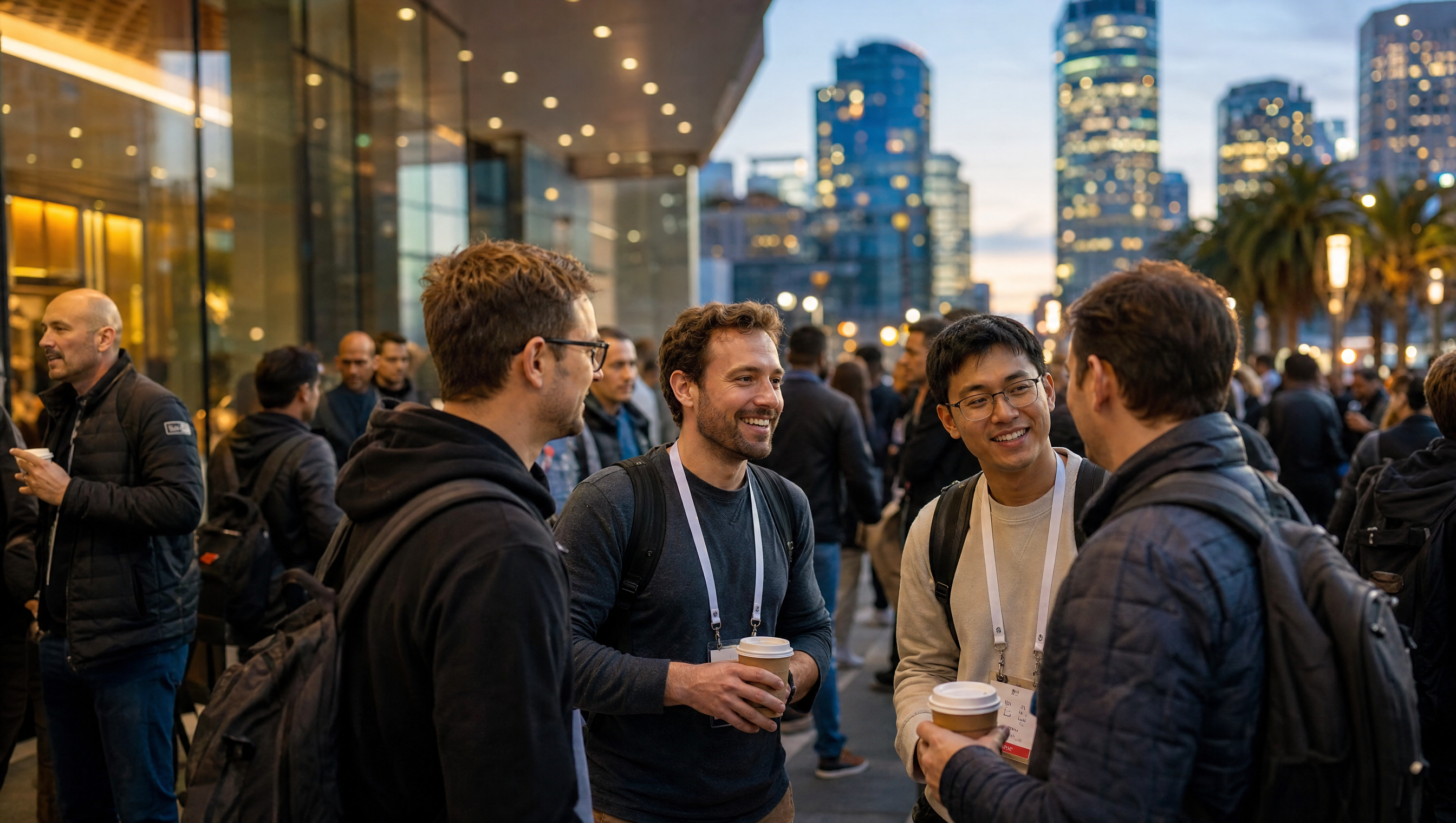
Dreamforce for Startups: How to Get Value Without a Big Budget
How startups get value from Dreamforce without a big budget. Free side events, networking hacks, and when to skip the main pass.
Dreamforce draws 40,000+ people to San Francisco every fall, and for a startup founder it raises an obvious question: is a $2,000+ pass actually worth it? For most early-stage teams, the honest answer is that the real value of Dreamforce lives outside the keynotes — in the side events, meetups, and hallway conversations that don't require a ticket at all. This guide breaks down how startups extract value from Dreamforce on a small budget, which free events to prioritize, and when you should skip the main conference entirely.
If you're a SaaS founder building on the Salesforce ecosystem — or you sell to the thousands of enterprise buyers who gather in SF that week — Dreamforce week is the densest networking opportunity on the calendar. You just have to approach it like a bootstrapper, not an enterprise buyer.
Is Dreamforce worth it for startups?
For most early-stage startups, Dreamforce is worth it only if you treat the week — not the conference — as the product. The main pass buys you keynote access, breakout sessions, and the Trailhead Expo floor. Those are valuable if you're deep in the Salesforce ecosystem, selling an AppExchange product, or trying to land enterprise meetings. If you're pre-product-market-fit, the pass fee rarely pays for itself.
What you're really buying with a trip to Dreamforce is proximity. During that week, thousands of Salesforce partners, VCs who invest in SaaS, enterprise buyers, and fellow founders are packed into a few blocks of SoMa and the Embarcadero. Every hotel lobby, rooftop, and coffee shop within a mile of Moscone Center becomes a networking venue. That concentration is what makes the week valuable — and it doesn't cost anything to stand in it.
A useful rule of thumb: if you have 5+ target accounts attending, buy the pass and book meetings in advance. If you're going to "see what happens," skip the pass and work the side events instead. For a deeper framework on evaluating any conference spend, see our guide on measuring whether an event is worth it.
What are Dreamforce side events (and why they're the real value)?
Dreamforce side events are the meetups, happy hours, dinners, rooftop parties, and offsites that partners, vendors, and communities host around the main conference — most of them free and none of them requiring a Dreamforce pass. Think community happy hours run by SaaS tools, partner showcase events, founder dinners, and VC office hours that pop up within walking distance of Moscone.
The reason these matter for startups is simple: side events are self-selecting. Everyone at a side event chose to be there for a specific reason — usually the same reason you did. A random badge-holder at the keynote might be a tourist; a founder at a 7 PM SaaS community happy hour is there to do business. You get higher-quality conversations per hour at side events than on the expo floor, at zero cost.
The playbook: in the two weeks before Dreamforce, build a target list of 10-15 side events. Partners and communities announce them on LinkedIn and Eventbrite starting in September. Prioritize events hosted by companies whose customers look like your customers — their guests are your buyer persona. Then batch them geographically so you're not racing across the city. This is the same strategy we recommend for finding free tech events generally, concentrated into one week.
How to find Dreamforce side events without a pass
Start with three sources: Eventbrite and Luma searches for "Dreamforce" during the conference week, the LinkedIn events your SaaS vendors post, and community Slack groups (SaaS communities and RevOps communities always announce their annual Dreamforce gathering). Cross-reference with whatever city event calendar you use the rest of the year — in SF, our weekly SF tech events roundup picks up the biggest side events, and you can browse live SF events here → year-round.
How much does Dreamforce actually cost for a startup?
The all-in cost for a startup to attend Dreamforce week breaks into three buckets. The main conference pass is the biggest line item — typically $1,500-$2,500 depending on when you buy, though startups sometimes get discounted or comped passes through partner programs, accelerator perks, or startup-specific deals Salesforce has offered in past years. Always ask your accelerator or any Salesforce partner you work with before paying full price.
The second bucket is travel: flights plus 4 nights in a San Francisco hotel during peak demand week, when rates within walking distance of Moscone routinely double. Budget $1,200-$2,500 for lodging if you're coming from out of town — or crash with a friend in the Mission and take BART. The third bucket is everything else: food (mostly covered if you work the side events, which serve free food and drinks almost nightly), and local transit.
The budget version of Dreamforce week looks like this: no pass, a cheap room 15 minutes out, free side events for food and networking, and 3-4 pre-booked meetings. Total: often under $800. The full version with a pass runs $4,000-$6,000 per person. The question is whether the keynote access and expo floor justify the extra $3,500+ — for most seed-stage teams, it doesn't. If you're weighing this against other conferences on the calendar, our comparison of big conferences vs. intimate networking events covers when each format wins.
How to network at Dreamforce as a first-time founder
First-timers treat Dreamforce like a lecture series and leave with a tote bag. Repeat attendees treat it like a deal-flow engine and leave with 30 new contacts and 5 booked demos. The difference is that repeat attendees go in with a target list: 10-20 named people or companies they want to meet, plus a stack of side events where those people will be.
Three tactics that work specifically at Dreamforce scale. First, work the perimeter: hotel lobbies and coffee shops near Moscone are full of attendees between sessions — badge-watching is legal and the easiest opener of the year ("what's your company doing here?"). Second, never eat alone: every side event has a food line, and lines are where conversations start. Third, book your follow-ups before you leave: our guide on how to network at tech events covers the full playbook, including the conference buddy system for splitting up a huge event with one other person.
One Dreamforce-specific note: the Salesforce ecosystem runs on partners. ISVs, consultancies, and SIs all send teams, and they're the friendliest door into the ecosystem — partner people are paid to build relationships. If you're building on or near the Salesforce platform, a single good partner conversation at a side event can outperform a month of cold outreach.
When should a startup skip Dreamforce entirely?
Skip Dreamforce — pass and trip — if any of these are true: you don't sell to enterprise or the Salesforce ecosystem; you're pre-revenue and your buyers aren't there; you'd be going mainly for FOMO; or the $3,000+ would meaningfully slow your runway. The hype cycle around Dreamforce is real, but a conference is a channel, not a milestone. If your ICP doesn't walk Moscone's halls, your money is better spent at a smaller event where they do.
There's also a middle path: send one person instead of the team, skip the pass, and treat it as a two-day side-event blitz. And remember that SF's event scene runs hot all year — if Dreamforce week doesn't fit, NYC, Austin, and Chicago all host SaaS and founder events that are easier to crack than a 40,000-person megaconference.
Dreamforce week checklist for budget-conscious founders
- 6-8 weeks out: check if your accelerator, investor, or a Salesforce partner can comp you a pass before you buy one.
- 3-4 weeks out: build your target list — 10-20 people/companies, and RSVP to 10-15 side events near Moscone.
- 2 weeks out: email every target asking for 20 minutes during the week; offer coffee near the venue, not a booth visit.
- Week of: batch your side events geographically; bring business cards and a charged phone; eat at events, not restaurants.
- Within 48 hours after: follow up with everyone you met — our non-salesy conference follow-up guide has the templates.
The bottom line: Dreamforce for startups is a great trade if you buy proximity, not access. The side events, the density of the SaaS world in one square mile, and the pre-booked meetings are where the ROI lives — and none of them require a lanyard.
Explore more from 47Hz
Want the same playbook for other mega-events and cities? These guides cover it:
Mega-conference survival guides
- AWS re:Invent for Startup Founders
- Is Web Summit Worth It for Early-Stage Founders?
- SXSW Founders Planning Guide
Networking and follow-up
- How to Build a Founder Network From Scratch
- Turn Event Connections Into Advisors
- Startup Conference Guide for Solo Founders
City guides
- San Francisco startup events
- New York startup events
- Seattle startup events
- Austin / Texas startup events
- Chicago startup events
47Hz tracks every major startup event, side event, and founder meetup — filter by city and never build a target list from scratch again.